News List
- NEWS -

~Quality Control~
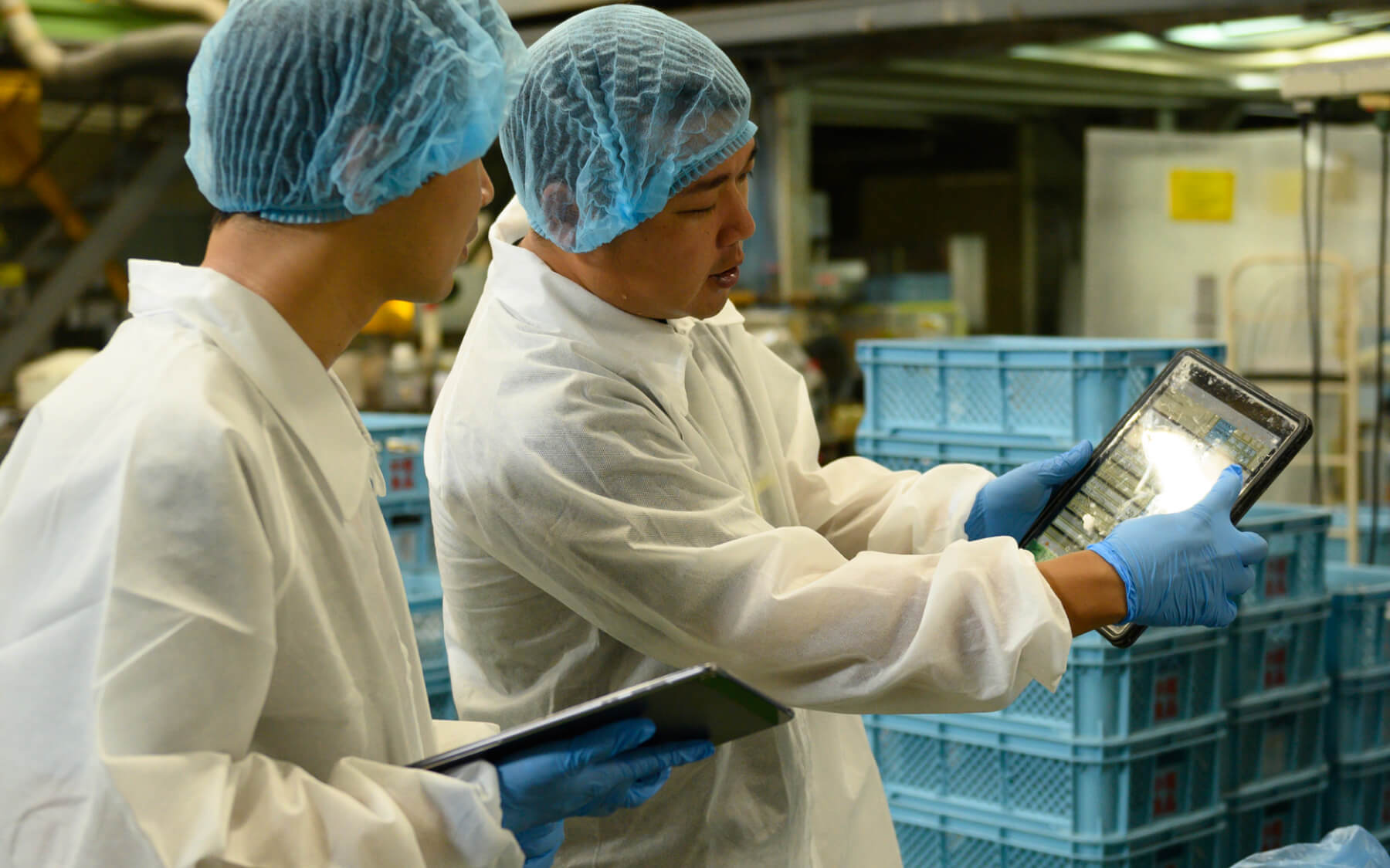


The purpose of quality control in food factories is to prevent food accidents.
For example, physical hazards, chemical hazards, biological hazards, incorrect date labeling, incorrect allergy labeling, etc.
In a broader sense, this means not letting down our customers who trust us and make purchases from us.
Since these are products sold to the public, it goes without saying that they must be safe, and we believe it is the responsibility of food manufacturers to guarantee this.
We strive to ensure that all employees understand this and work with a quality control awareness and ethical standards.
I educate every day.
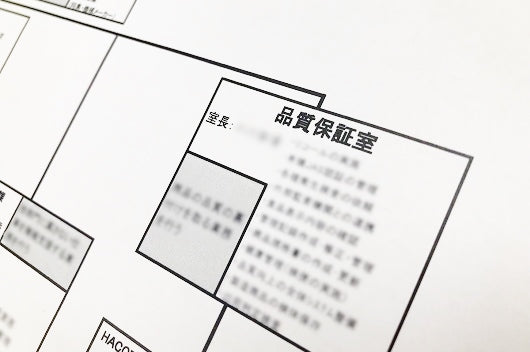
Quality Assurance Department
This department also operates as a department that checks and guarantees everything, including quality control operations, and more broadly, including distribution.
We are responsible for a variety of quality-related tasks, including checking and managing records, collaborating with external organizations, creating product specifications, shipping determination inspections, storage inspections, checking food labeling, and certification management.
We also provide the following guidance to our employees:
Examples of management items: health management, hand washing, distinction between contaminated and non-contaminated areas, wearing the correct work clothes, rolling the floor before entering the manufacturing site, prohibited items, etc.
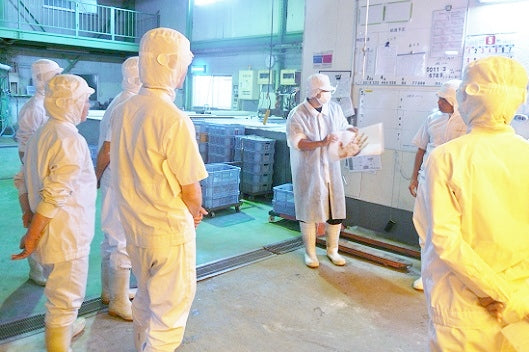
HACCP Team
This is the name of a small team made up of employees, and HACCP is a management method for ensuring safety when manufacturing food, and is a method adopted in countries around the world.
We conduct employee training twice a year to unify the awareness of all employees, and we also conduct internal audits once a month to continuously identify areas for improvement and make improvements.
During the internal audit, two members are selected from the team to go around the factory, check for improvements made in the previous month, and conduct an audit for the current month. If any rule violations, dangerous areas, or missing records are found, they are asked to make improvements, and employees make the necessary improvements.

Traceability
This refers to tracking the movement of food through one or more specific stages of production, processing, and distribution.
At our company, we record all information such as production time, manpower, raw materials (quantity and lot), and finished products (quantity and lot) in a daily production report, and input that information into our core system, so we can track all information using numbers such as expiration dates printed on the products.
Additionally, we register the product lot information when shipping, so we can manage how much is being delivered to each customer.
This allows for traceability from raw materials to shipment.
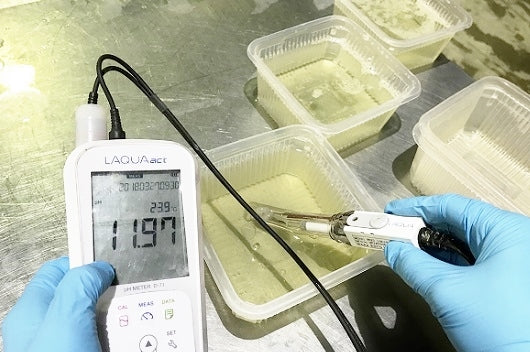
Inspection work
Our main daily inspection tasks include the following:
- During manufacturing, samples are taken for pH and quantity testing. - The next day, a final inspection is conducted to determine whether the product will be shipped (pH, sensory evaluation, and quantity).
- Post-expiration date inspection (pH, sensory evaluation, and quantity)
Other outsourced tests, such as temporary inspections, microbiological tests, and radioactivity tests, are conducted as needed. Scales and thermometers are regularly inspected and calibrated.
We also outsource pest and rodent control monitoring to identify trends in the insects being caught and take measures to prevent foreign matter from getting mixed in.
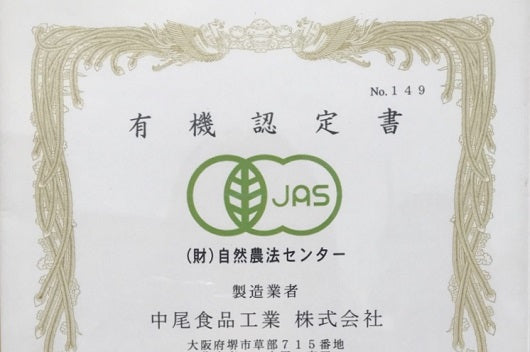
Organic JAS certified
A registered certification body inspects to ensure that production complies with the JAS standards for organic food (ingredients, processes, etc.), and only businesses that are certified can display the Organic JAS mark.
Even after certification, there is an annual inspection.
We are certified for the following eight types of products, and these products are subject to stricter control.
・100% Organic Fresh Konjac, Kikumatsu [Board] 250g
・100% Organic Raw Konjac (Kikumatsu [Thread]) 180g
・4 pieces of hand-knotted shirataki noodles made from 100% organic raw sweet potato ・250g of organic Japanese raw sweet potato konjac on a sheet, 120g of mini sheets
・Organic Japanese raw sweet potato konjac threads 500g, 200g, mini threads 120g